

“I gazed up at the portraits surrounding me — they gazed back at me. Their eyes and expressions conveyed a vulnerability that they rarely expressed in real life.” – from Tipi on the Hill, Ep. 34 - If Portraits Could Talk
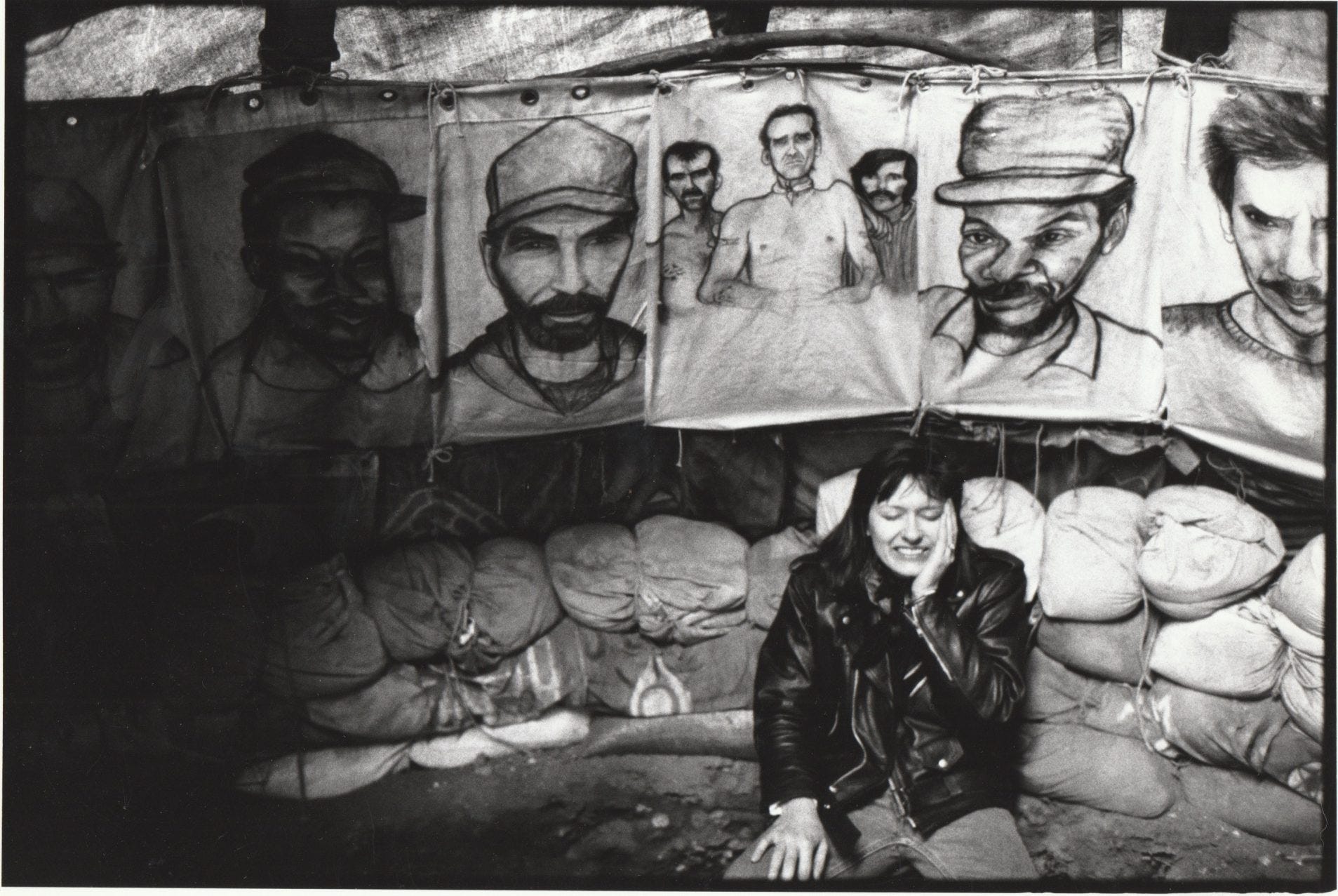
Through the portraits she paints, Gabriele becomes the storyteller of the inner world of the Hill — a world that is at odds with the outer world. To inhabit the often hostile drug environment, some variation of the hard-edged, streetwise persona needs to be projected. No show of vulnerability in such a persona.
The social masks we wear suppress the authentic self. A hidden truth beneath that mask might emerge when someone paints a portrait of you, but can some truth about your genuine self also emerge from a character you construct?
In Jean Genet’s The Balcony ordinary people don elaborate costumes and masks to pretend they are Bishops, Judges, and Generals. In the play, sex-workers in a brothel – what Madame Irma calls her “House of Illusions” – satisfy client fantasies. In our production, art-workers probed their own fantasies to create an immersive theatre experience. The ensemble fabricated performance/art installations in “brothel rooms.” Each performer devised a persona and a scenario that creatively explored their shadow self. Audiences were invited to wander the rooms and experience the fantasies of “Madame Irma’s working girls.”
These personas also created art — both objects and services — that they offered for purchase to individual theatregoers via a menu.
The following self-portraits, in text and image, were created by three of the Art Brothel escorts.
The Shadow
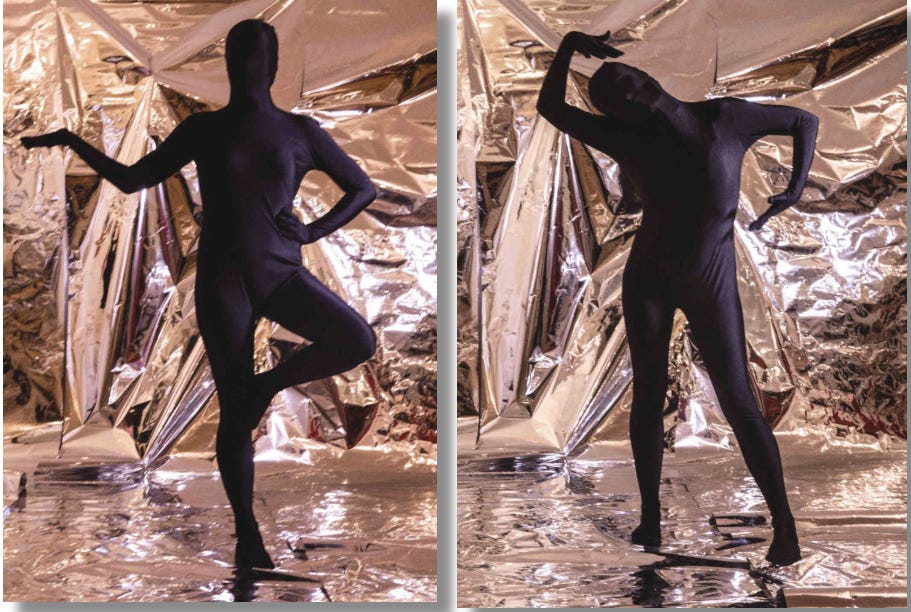
“A little piece of the darkness in the house of illusions became so curious, it broke free and became The Shadow. Being a shadow, it mimics the behaviors of the humans it observes without understanding. It cannot feel what they feel. It cannot be harmed or damaged. It can only play at doing so, like a child playing at being the grown ups around them. After all, nobody can tell you to smile when you don’t have a face.”
Azazel Keres Abraxas
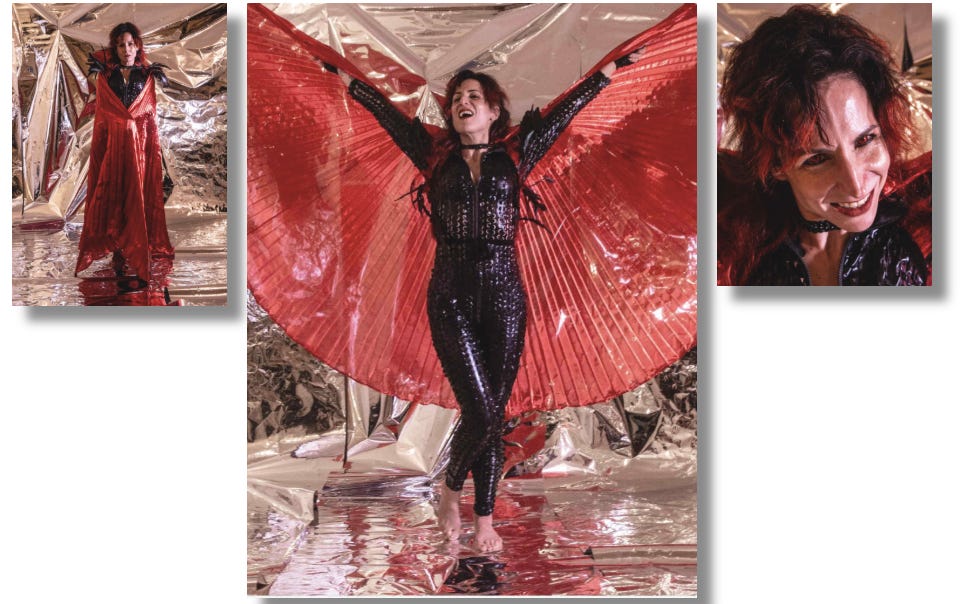
“AKA for short, (an expression we use meaning ‘otherwise known as’ since she is capable of being many and any identity her clients desire.)
She is rumored to be the daughter of a Succubus with family ties to the Keres (Greek goddesses associated with violent and bloody death), and a descendant of Abraxas, mythical figure considered an angel by some and a demon by others.
Who or what she truly is remains to be seen.
Spend an evening with AKA and:
Face your fantasy?
Face your fetish?
Face your fear?
You decide.
…for a price”
Katharsis
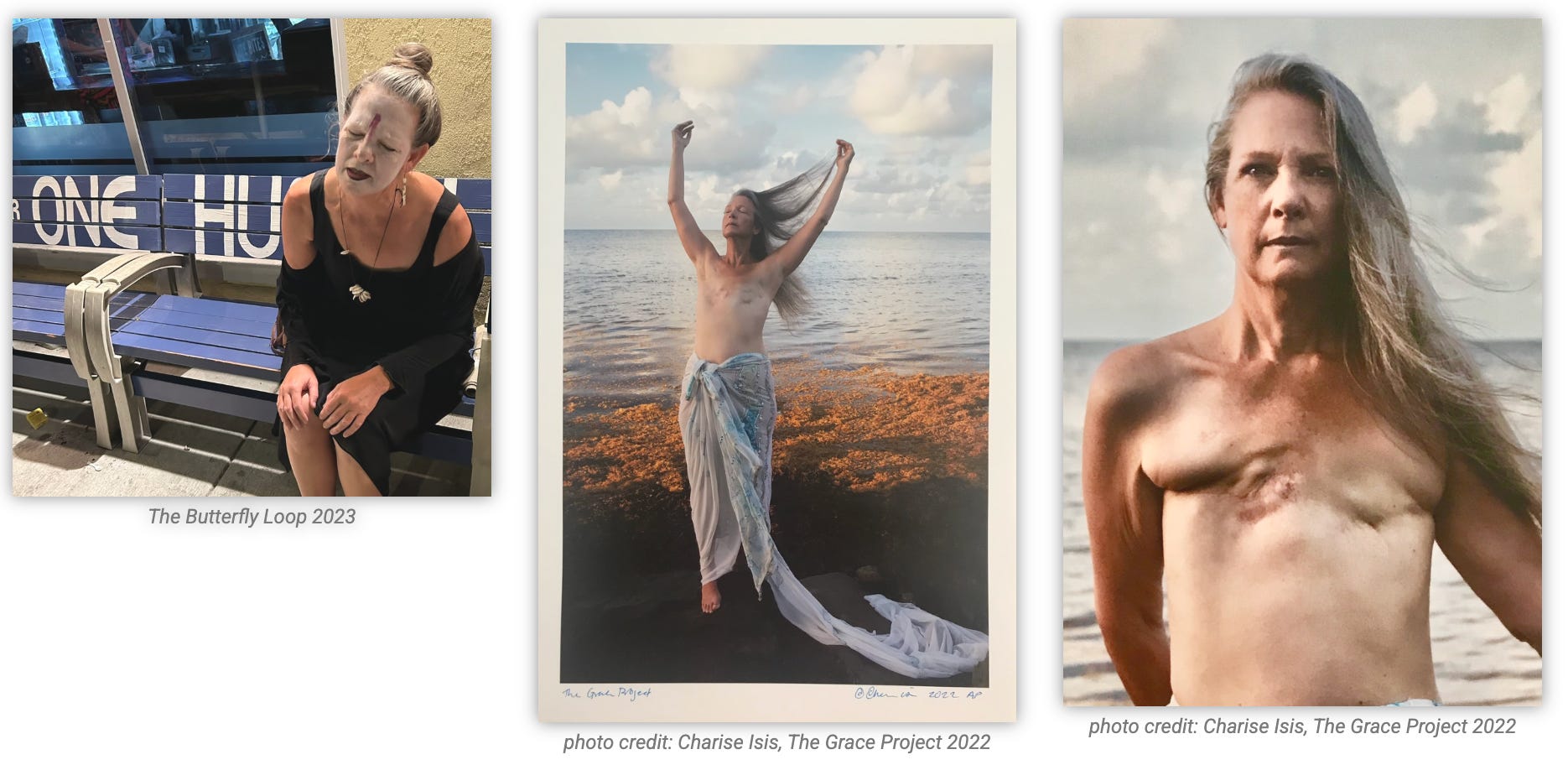
“Katharsis, steward of The Stripper’s Halfway House and emissary to The Queen of Nothing: ruler of the galaxy Mu Wu, is the great, great, great, great, grand daughter of Toulouse Lautrec. A dedicated Cancer Dancer, she works at entertaining the troops and recovering Visual Image from The Mountains of Written Word. She is rumored to be sleeping with the enemy and occasionally filling in for Prancer.”
In conflating sexworker and artworker into a persona which was neither and both, the escort/actors invented a marketplace that was neither the brothel nor the art market. The marketplace they created was a new species of theatre — Art Brothel. The self-portrait is first and foremost a self-study. The product is not a product but an element in an elaborate fantasy constructed around the self. Attempt to purchase such a service or product at your own risk.
I view Gabriele’s portraits collectively as also belonging to the same genre of self-portrait. From her sewing together 78 opened canvas US Postal mail bags (the number of cards in a tarot deck) into the tipi cover, to her painted illustratrations of the Minor Arcana, to her portraits of the Pages, Knights, Queens, and Kings of the Hill, she essentially created an intricate self-portrait of both herself and the Hill. Similarly, Plains Indians also painted their inner linings with personal, spiritual, or historical designs that represented the history of the family or tribe. The portraits gracing the inner lining of the Tipi on the Hill over its three-year life span embodied such a history.
The most authentic self-portrait may be the one you create with other people.


Writing in this section consists of a series of essays written contemporaneously with the serialized episodes in Tipi on the Hill. The episode concurrent with this essay is Ep. 34 - If Portraits Could Talk.
These essays are also an examination of the rubric itself: Meta-memoir. Please engage in the comment section in any of these essays about the nature of your own creative nonfiction.
These photos of you two!